Management of portable toilets in Africa: an innovative solution for sustainable sanitation

Introduction
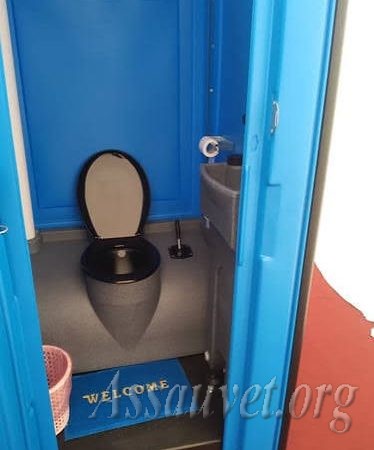
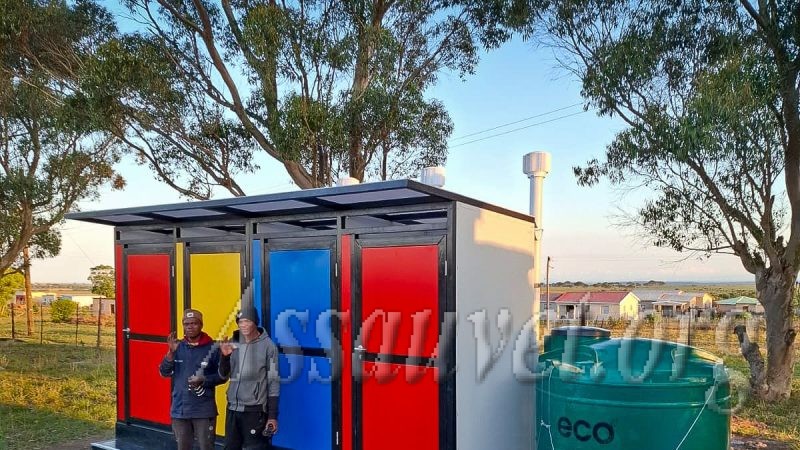
Access to safe and dignified sanitation services is a major development challenge in Africa. In the face of population growth, rapid urbanisation and inadequate sanitation infrastructure in many areas, portable toilets offer a complementary solution to meet people’s needs, particularly in public spaces, on construction sites, in markets, in temporary accommodation and in humanitarian response areas.
However, simply installing portable toilets is not enough to ensure effective sanitation. Their effectiveness depends largely on the quality of their management, the regularity of their maintenance, the safety of emptying operations, and the transport of the collected waste to appropriate treatment facilities.
From this perspective, the management of portable toilets is a key means of strengthening WASH services, preventing health risks and helping to build healthier, more inclusive and more resilient communities.
- Portable toilets: a solution to sanitation challenges in Africa
In many African cities, sanitation infrastructure does not always keep pace with urban expansion. Markets, coach stations, public gathering places, under-served neighbourhoods and certain construction sites all have significant needs for accessible sanitary facilities.
Portable toilets provide a rapid solution to these needs thanks to their flexibility and ease of deployment.
In particular, they can be used to:
- improve access to sanitation facilities in public spaces;
- meet sanitation needs during cultural, sporting and community events;
- provide sanitation services on construction sites and at temporary locations;
- support humanitarian responses in emergency situations;
- supplement existing infrastructure in underserved areas.
When properly sized and maintained, these facilities help to reduce open defecation and limit people’s exposure to faecal matter.
They must, however, form part of a comprehensive sanitation strategy, complementing the development of permanent solutions tailored to the needs of communities.
2. Effective management to protect public health
Poorly maintained portable toilets can become a source of nuisance, environmental contamination and health risks. Rigorous management is therefore essential to safeguard the health of users and the staff responsible for their operation.
Maintenance and hygiene of the facilities
Regular cleaning of the cubicles, proper disinfection of frequently touched surfaces and the replenishment of consumables are essential for maintaining satisfactory sanitary conditions.
The provision of hand-washing facilities with soap and water must also be included as part of the service, where possible and where compatible with the technology used.
Maintenance operations must be carried out in accordance with defined protocols, using suitable products and personal protective equipment.
Emptying and treating collected waste
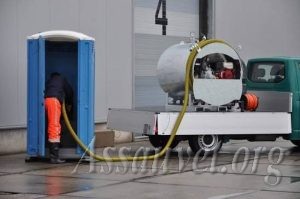
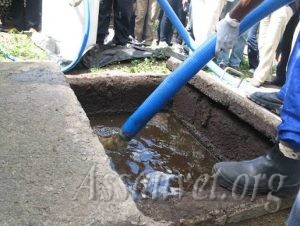
The emptying of portable toilets is a critical stage in the sanitation process. It must be planned according to the capacity of the tanks, the number of users and the frequency of use.
The collected waste must be transported safely to authorised facilities suitable for its treatment.
Discharges into drains, watercourses, undeveloped land or unauthorised agricultural areas pose risks to human health and ecosystems.
Responsible management must therefore ensure the traceability of operations, from collection right through to the final destination of the waste.
3. Portable toilets and environmental protection
Sustainable sanitation is not limited to the provision of sanitary facilities. It also involves preventing pollution and managing waste responsibly.
Poor management of waste can contaminate soil, surface water and groundwater resources. It can also contribute to the degradation of natural habitats and the spread of diseases linked to unsanitary conditions.
To reduce these risks, operators and institutional partners must promote:
- the safe collection of waste;
- the use of suitable, leak-proof transport;
- the treatment of waste in suitable facilities;
- the monitoring of discharges and the prevention of illegal dumping;
- staff training in good environmental practices;
- raising users’ awareness of the correct use of facilities.
Where technical, health and regulatory conditions permit, certain sectors may also consider the recovery of by-products resulting from treatment.
These practices help to promote an approach to sanitation based on the protection of natural resources and the principles of the circular economy.
4. An inclusive approach centred on the needs of communities
Access to toilets must be safe, dignified and tailored to the needs of all sections of the population.
The design and organisation of mobile toilet facilities must take into account the specific needs of women and girls, children, older people and people with disabilities.
Particular attention must be paid to privacy, safety, physical accessibility, lighting in areas used at night, and the availability of appropriate solutions for managing menstrual hygiene.
Consulting communities and users also helps to identify barriers to the use of facilities, improve their acceptability and strengthen ownership of the services.
Within an integrated WASH approach, hygiene promotion therefore goes hand in hand with the provision of facilities in order to encourage sustainable and responsible behaviour.
5. The role of NGOs in promoting portable toilets
Non-governmental organisations play an important role in improving access to sanitation, particularly amongst vulnerable populations and in areas where services are inadequate.
Their work can focus on several complementary areas:
Community awareness-raising: informing communities about the health risks associated with poor excreta management and promoting good hygiene practices.
Capacity building: training local stakeholders, site managers and maintenance staff in the requirements for a high-quality sanitation service.
Partner mobilisation: facilitating collaboration between local authorities, specialist companies, technical services and communities.
Promotion of appropriate solutions: helping to identify technologies that are affordable, robust and compatible with local conditions.
Monitoring and evaluation: documenting the results of interventions using indicators relating to the availability of facilities, the quality of maintenance, the management of waste, and user satisfaction.
NGOs can thus contribute to the development of more effective sanitation services, whilst fostering community participation and accountability amongst the various stakeholders.
6. Towards sustainable and innovative management models
The roll-out of mobile toilets in Africa requires operating models that are economically viable, technically reliable and compliant with environmental requirements.
Partnerships between local authorities, private companies, NGOs and development partners can facilitate the financing of equipment, the organisation of maintenance and access to treatment facilities.
The use of digital tools can also improve operational planning, the monitoring of interventions and the traceability of collected materials.
However, these innovations must be accompanied by monitoring mechanisms, ongoing staff training and a clear definition of responsibilities.
The sustainability of the service depends on striking a balance between service quality, cost control, accessibility for users and environmental protection.
7. A contribution to the Sustainable Development Goals
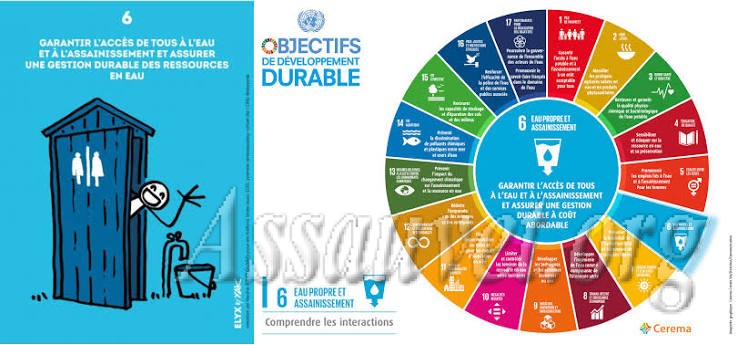
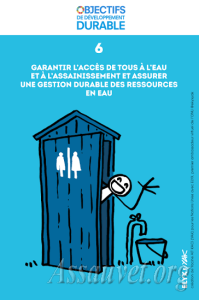
Responsible management of portable toilets contributes directly to Sustainable Development Goal 6 (SDG 6), which aims to ensure access to water and sanitation for all and to ensure the sustainable management of water resources.
It can also contribute to SDG 3 on good health and well-being, SDG 11 on sustainable cities and communities, and SDG 12 on responsible consumption and production.
However, these contributions depend on the actual quality of the service, the safety of the treatment of collected waste, and its integration into local sanitation policies and programmes.
Conclusion: making mobile sanitation a sustainable service
Mobile toilets offer a viable solution to certain sanitation needs in Africa. However, their potential cannot be fully realised without rigorous organisation of their installation, maintenance, emptying and the treatment of the waste collected.
For NGOs and stakeholders in the WASH sector, the challenge lies in promoting accessible, inclusive and environmentally friendly services, whilst strengthening the capacities of communities and local operators.
An integrated approach, based on the prevention of health risks, environmental responsibility, community participation and cooperation between stakeholders, will enable mobile toilets to become a complementary tool in the pursuit of sustainable development.
Sustainable sanitation begins with appropriate facilities, but is built above all through responsible management, reliable services and a collective commitment to health and human dignity.
Our commitment to sustainable sanitation
Development stakeholders, local authorities, civil society organisations and specialist operators are called upon to join forces to bring about a sustainable improvement in access to sanitation services.
Together, we can contribute to healthier communities, cleaner public spaces and a better-protected environment.