MOBILE TOILETS IN URBAN AREAS: A PRAGMATIC RESPONSE TO THE SANITATION CRISIS
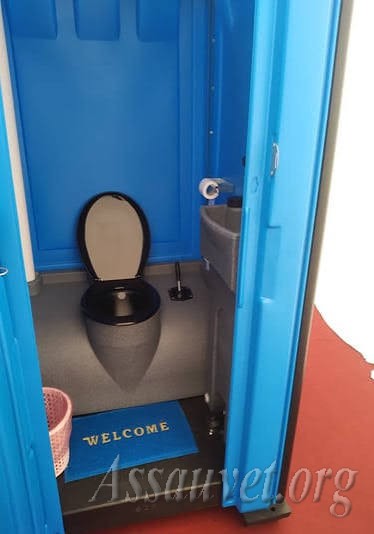
A sanitation deficit that is worsening as urbanisation progresses
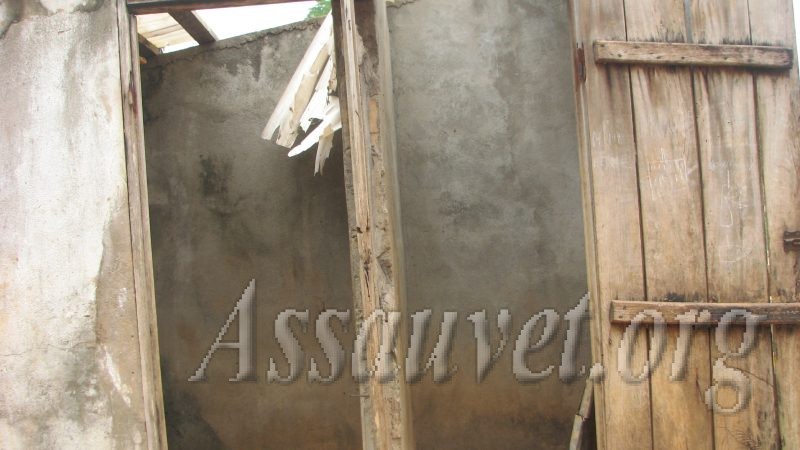
Africa is urbanising faster than its sanitation infrastructure is keeping pace. According to UN-Habitat estimates reported by the World Bank, nearly 40 per cent of urban dwellers in developing countries live in informal settlements, a proportion that continues to rise as cities absorb millions of new residents every year. This demographic pressure results in a glaring shortage of functional toilets in markets, coach stations, commercial areas and densely populated neighbourhoods.
The facts are well documented: across the continent, hundreds of millions of people still lack access to basic sanitation, and a significant proportion of them still practise open defecation — a phenomenon that is particularly visible and dangerous in densely populated urban areas, where the space available for disposing of or treating excreta is structurally limited. This shortfall is not merely a matter of comfort: the World Bank estimates that the economic cost of inadequate sanitation amounts to several percentage points of GDP in many African countries, due to lost productivity, healthcare expenditure and premature mortality linked to diarrhoeal diseases.
It is against this backdrop that portable toilets — transportable, rapidly deployable solutions that do not require an immediate connection to a sewerage system — are increasingly being used by local authorities, NGOs and private operators to address the urban shortfall, either whilst awaiting the installation of permanent infrastructure or as a complement to it.
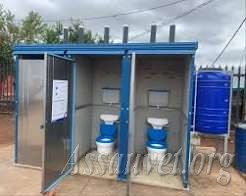
What does the term ‘mobile toilets’ cover?
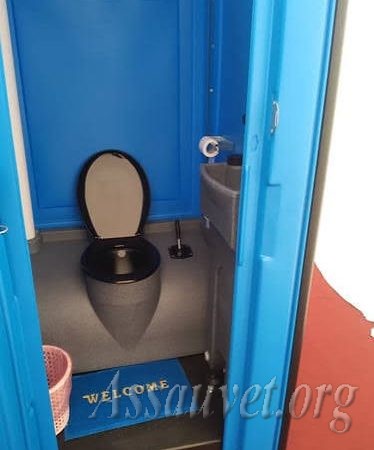
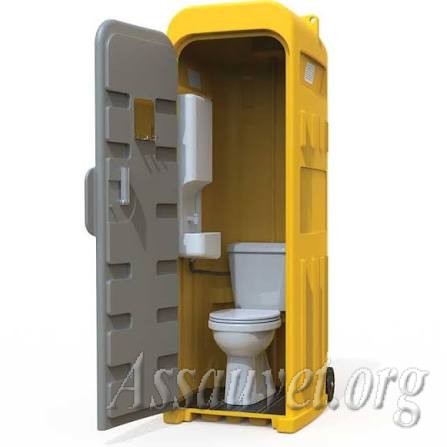
- Mobile chemical toilets: self-contained units that use a disinfectant to minimise odours and microbial growth, without requiring a connection to water or the mains drainage system. Widely used at public events, on construction sites or in emergency situations.
- Separation or composting toilets: urine and faeces are separated at source, which facilitates treatment and, in some cases, allows the by-products to be reused in agriculture after sanitisation.
- Container-based sanitation (CBS): a system in which excreta are collected in sealed cartridges or containers, which are regularly collected by an operator and transported to a centralised treatment site. This model, popularised in particular by social enterprises in East and West Africa, combines local service provision with downstream industrial treatment.
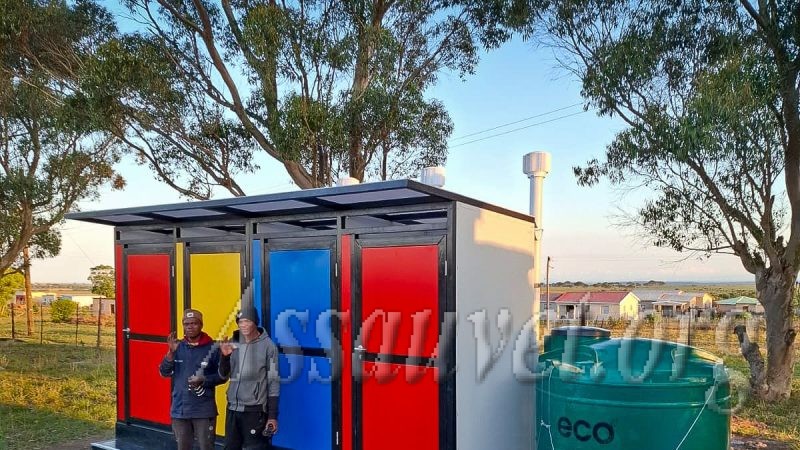
- Prefabricated, movable cubicles, which are sometimes self-sufficient in terms of energy (solar panels) and water (closed-loop system with partial recycling), installed on a permanent basis at high-traffic locations in the city (markets, railway stations, beaches, crossroads) but designed to be moved if needs change.
Recent programmes illustrate this diversity: in Dakar, the Senegalese authorities have launched a large-scale programme to install fixed and mobile public toilets at major crossroads, in shopping areas and in densely populated neighbourhoods, treating this as a priority for public health and human dignity. In the same country, self-contained, closed-circuit flushing toilet solutions have been trialled to develop a model that can be scaled up industrially and is suited to the realities of medium-sized towns lacking a sewerage network.
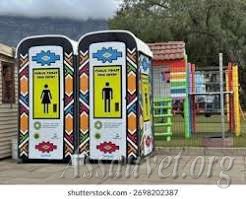
Why portable toilets are proving popular in fast-growing cities
- Rapid deployment. Unlike a sewerage network or a treatment plant, a portable toilet can be installed within a few days at a priority site (market, coach station, camp for displaced people, flooded area), without having to wait years for civil engineering works to be completed.
- No reliance on an existing network. In the majority of medium-sized African towns, the sewerage network is either non-existent or very limited. Mobile toilets operate as stand-alone or semi-autonomous systems (sealed pit, cartridge, composting), making them particularly suitable precisely where conventional sanitation is not economically viable in the short term.
- Flexibility of use. They can be redeployed as needs change: a market that moves, a temporary event, an area affected by flooding, or a gathering place for a religious or political celebration.
- Emergency response. In the context of a humanitarian crisis, population displacement or a natural disaster, mobile toilets are often the first sanitation solution available, prior to the implementation of more sustainable solutions.
- A catalyst for behavioural change. Installed in high-traffic areas, they make dignified sanitation facilities visible and accessible, which can help to reduce open defecation in densely populated urban areas where it persists due to a lack of alternatives rather than by choice.
Limitations and areas requiring attention
As a WASH practitioner, it is essential not to present mobile toilets as a direct substitute for fixed networks. Several structural limitations are worth highlighting:
- Urban sanitation is a chain of services, not an isolated entity. Simply installing a toilet cubicle is not enough: without a reliable system for emptying, transporting and treating sludge downstream, the toilet quickly becomes a point of failure in sanitation rather than a solution. It is precisely this link — the management of sludge — that is most often missing in poorly designed projects.
- Underestimated recurring costs. Contrary to popular belief, a portable toilet is not free to operate: daily cleaning, regular emptying and the replacement of consumables (water, disinfectants, cartridges) represent an ongoing operating cost that must be budgeted for from the project’s design stage, with a clear funding model (user charges, local authority grants, private partnerships).
- Risk of abandonment in the absence of governance. Many mobile facilities end up falling into disuse due to the lack of a clearly identified management committee, defined maintenance responsibilities or a mechanism for reporting faults.
- Social acceptability and safety. The layout must take into account lighting, the separation of men and women, accessibility for people with reduced mobility, and safety at night; otherwise, the facilities risk being under-used, particularly by women and girls.
- They are not a substitute for a permanent network. Mobile toilets are a transitional and complementary measure, not a long-term urban sanitation policy. They must form part of a broader strategy combining fixed networks, improved household latrines and city-wide management of sewage sludge.
Best practice for a successful roll-out
- Assess needs before installation. Prioritise high-traffic locations with a proven shortage of facilities (markets, railway stations, schools, densely populated informal settlements) rather than opting for an inefficient, uniform distribution.
- Secure the waste collection and treatment chain prior to roll-out, with a designated operator and a clear service contract — as the toilet itself is merely the visible part of the system.
- Involve a community management committee or a local operator responsible for day-to-day maintenance, with a sustainable funding mechanism (moderate user charges, municipal subsidy, sponsorship).
- Integrate menstrual hygiene from the design stage: closed bins, water points for washing, and possibly the distribution of sanitary products, so that the facility genuinely meets the needs of women and girls.
- Train users and managers in maintenance, proper use and reporting faults, drawing on community representatives and local leaders to foster ownership of the facility.
- Monitor and evaluate: usage rates, functionality, cleanliness, user satisfaction — all indicators to be collected regularly to adjust the roll-out.
In conclusion
Mobile toilets alone will not solve the urban sanitation crisis. However, when used judiciously — targeted at high-density areas with proven shortages, backed by a functional collection and treatment system, and managed under clear local governance — they provide a pragmatic and flexible tool for delivering a rapid, dignified and safe solution in places where fixed networks will take years to reach. Their true added value lies less in the technology itself than in the quality of the service that surrounds it: maintenance, governance and integration into an overall urban sanitation strategy.