PORTABLE TOILETS: A MODERN AND SUSTAINABLE SOLUTION TO MEET SANITATION CHALLENGES
Introduction
Access to clean, safe and appropriate toilets is a major public health and sustainable development issue. In many towns in the Far North Region of Cameroon, population growth, rapid urbanisation and inadequate sanitation infrastructure are exacerbating the difficulties in accessing adequate sanitation services.
In this context, portable toilets offer a practical and flexible solution to meet the needs of the public, businesses, local authorities and event organisers.
Used on building sites, in markets, at public events, in areas lacking sanitation facilities or in humanitarian emergencies, they make it possible to provide sanitation facilities without necessarily having to construct permanent buildings.
However, their effectiveness depends on several key factors: the choice of technology, the quality of maintenance, the management of the materials collected, and the availability of a suitable treatment process.
- What is a portable toilet?
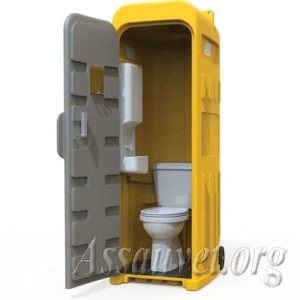
A portable toilet is a sanitary facility designed to be transported, moved or installed either temporarily or permanently on a site, depending on users’ needs.
Unlike conventional toilets, which generally require a fixed infrastructure, portable toilets can operate independently using a storage tank or be connected to suitable collection and treatment systems.
They are available in a range of models, depending on their intended use, capacity, level of comfort and the technical constraints of the site.
The main types of portable toilets include :
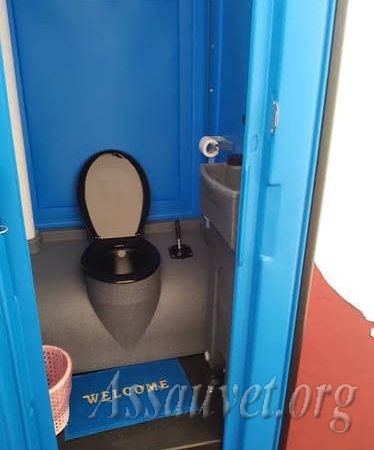
- Chemical toilets: Fitted with a tank and specialised products to control odours and facilitate effluent management.
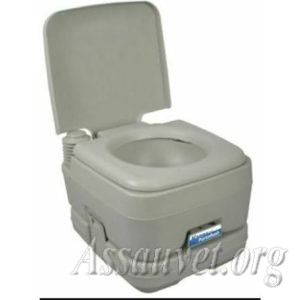
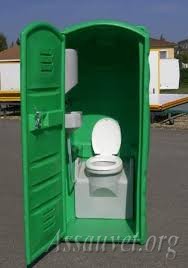
- Toilets with a collection tank : Designed to collect waste in a sealed tank that needs to be emptied regularly.
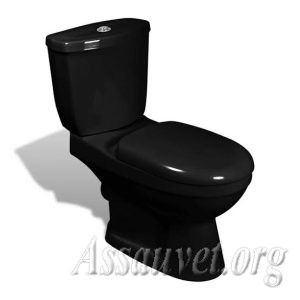
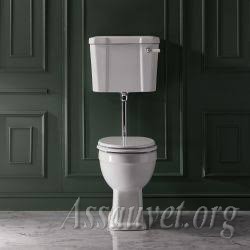
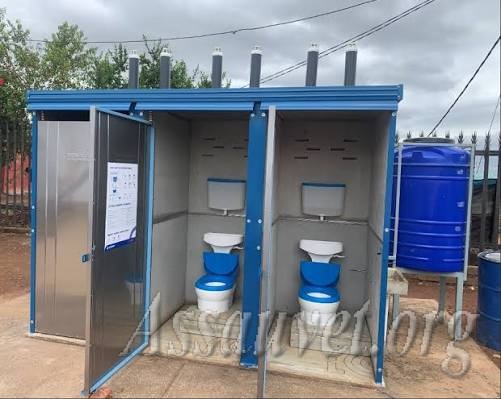
- Connectable portable toilets: designed for sites with suitable connections to a mains network or a treatment system.
- Water-efficient toilets: designed to minimise water consumption whilst ensuring hygienic conditions of use.

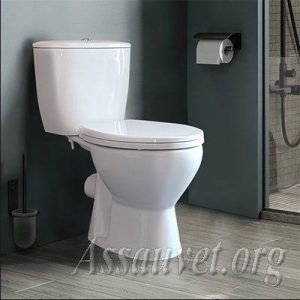
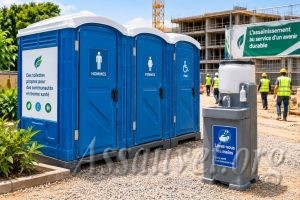
- Integrated mobile sanitary units: these may comprise several cubicles, hand-washing facilities and, depending on the model, additional facilities designed to ensure users’ comfort.
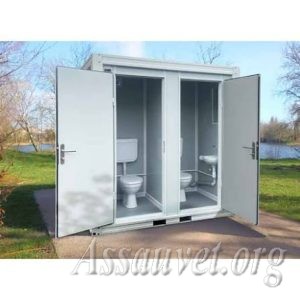
The choice of model should be based on the expected number of visitors, the duration of use, the availability of water, access conditions, and the options for emptying and treatment.
What are the areas of application for portable toilets?
The versatility of portable toilets means they can be used across a wide range of sectors.
- On building sites
Construction sites welcome workers every day, and these workers must have access to suitable sanitary facilities. Portable toilets provide a solution to this need, even when buildings are not yet connected to the sewerage system.
They help to improve working conditions, maintain hygiene on site and facilitate compliance with the relevant health and safety requirements.
2. At public events
Concerts, fairs, festivals, ceremonies, sporting events and public gatherings generate significant sanitation requirements over a limited period.
The provision of portable toilets helps to manage visitor flows more effectively, reduce the strain on existing facilities and maintain satisfactory hygiene standards.
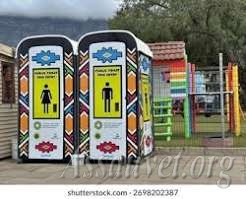
3. In markets and public spaces
Markets, coach stations, shopping centres and certain high-traffic areas require accessible toilet facilities.
When correctly positioned and maintained, portable toilets can help to improve the cleanliness of public spaces and the conditions for users.
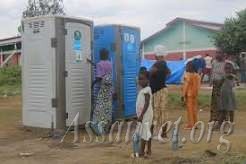
4. In urban areas with inadequate facilities
In some neighbourhoods where sanitation infrastructure is limited, portable toilets can provide a complementary solution, particularly as part of pilot projects or community sanitation schemes.
However, their installation must be accompanied by a reliable system for the collection, emptying and treatment of waste.
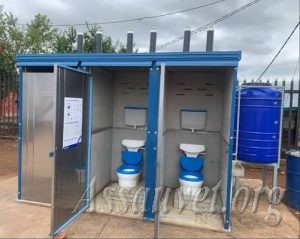
5. In a humanitarian emergency
Following floods, population displacement or natural disasters, access to sanitation facilities can become particularly difficult.
Portable toilets can then help to meet the needs of those affected quickly, provided that they are installed in accordance with the principles of emergency sanitation and that there is sufficient waste management capacity.
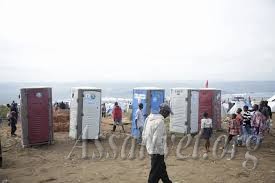
The main advantages of portable toilets
-
Quick installation
Portable toilets can be deployed within a relatively short timeframe, subject to the availability of equipment and site accessibility. They therefore enable organisations to meet short-term needs without immediately having to undertake major construction work.
-
Great flexibility
Their portability makes it easy to move them from one site to another as needs change. This feature is particularly useful for construction companies, event organisers and sanitation service providers.
-
Improved hygiene conditions
By providing users with suitable facilities, portable toilets can help to minimise open defecation and reduce the risk of environmental contamination.
However, this benefit depends on the availability of consumables, regular cleaning and the safe management of collected waste.
-
Reducing infrastructure constraints
In certain contexts, portable toilets make it possible to avoid major building works or difficult connections. They therefore represent a suitable solution for temporary installations and sites where the construction of permanent facilities is not immediately possible.
-
A contribution to human dignity
Access to clean, safe and sufficiently accessible toilets is essential for safeguarding people’s privacy, dignity and well-being.
In particular, facilities must take into account the needs of women, children, older people and people with reduced mobility.
-
How can you ensure effective management of portable toilets?
The performance of a portable toilet service does not depend solely on the quality of the equipment. It depends above all on how their operation and maintenance are organised.
-
Cleaning and Disinfection
A cleaning programme must be drawn up based on the number of users, the level of footfall at the site and the health risks. Contact surfaces, floors, equipment and surrounding areas must be cleaned regularly.
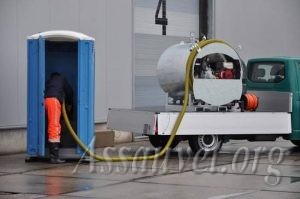
- Emptying the tanks
The tanks must be emptied before they become full by operators with the necessary technical resources and protective equipment.
The collected materials must be transported safely to a suitable treatment facility. Discharging them into drains, watercourses or natural areas exposes the public and the environment to significant risks.
- Consumables management
Soap, water for handwashing, toilet paper and other necessary consumables must be available in accordance with the facility’s specifications.
The provision of handwashing facilities is an important part of a high-quality sanitary service.
- Preventive maintenance
Regular inspections help to detect leaks, cracks, faults with the closing mechanism, ventilation problems and other damage that could compromise users’ safety or comfort.
-
Monitoring of operations
A monitoring system must be in place to record cleaning, emptying, technical incidents and any maintenance carried out. This approach facilitates quality control of the service and the continuous improvement of operations.
-
Portable toilets and environmental protection
The management of portable toilets must form part of a comprehensive approach to environmental protection.
Improper handling of tanks, unsafe emptying or a lack of appropriate treatment can lead to the contamination of soil, surface water and groundwater resources.
To prevent these risks, it is essential to prioritise watertight equipment, safe transport procedures and appropriate treatment processes.
Water-efficient solutions may also be of benefit in areas facing water supply difficulties. However, when selecting such solutions, consideration must be given to their sanitary effectiveness, operating costs and local maintenance capabilities.
The sustainability of a portable toilet therefore depends on the entire service chain: installation, use, cleaning, collection, transport and final treatment.
- Portable toilets in Africa: opportunities to be explored
In many parts of Africa, there remains a significant need for sanitation due to urban growth, inadequate infrastructure in some areas, and difficulties in accessing safely managed sanitation services.
Mobile toilets can help address these challenges by offering solutions tailored to local conditions.
In Cameroon, for example, their use can be considered on construction sites, in markets, at large gatherings, in certain peri-urban areas and in community sanitation projects, as well as in markets, coach stations and refugee camps.
The development of this sector also offers opportunities for companies specialising in the hire of sanitation equipment, cleaning, maintenance, emptying and the transport of waste.
To succeed, these initiatives must be based on a prior needs assessment, appropriate pricing, compliance with regulatory requirements and the availability of suitable treatment facilities.
Collaboration between local authorities, private companies, NGOs and communities can help foster the emergence of more accessible and better-organised sanitation services.
- How do you choose a portable toilet hire company?
Choosing the right service provider is crucial to ensuring the quality and continuity of the service.
Before entering into a contract, several criteria must be considered:
- The quality of the facilities: stability, watertightness, ventilation, ease of cleaning and the general condition of the cubicles.
- Service capacity: the number of toilets available and whether this is sufficient for the expected footfall.
- Punctuality: adherence to deadlines for delivery, installation, cleaning and collection.
- Waste management: the existence of a secure procedure for emptying, transporting and treating waste.
- Maintenance: the availability of a team capable of responding in the event of a breakdown or overflow.
- Accessibility: the provision, where necessary, of facilities suitable for people with reduced mobility.
- Cost transparency: clear details of rental, transport, maintenance, emptying and any additional service charges.
Ideally, a rental quote should specify the duration of the service, the frequency of maintenance, the responsibilities of each party and the procedures for handling incidents.
Conclusion
Portable toilets offer a practical and flexible solution for improving access to sanitary facilities in public spaces, on building sites, at events and in areas where facilities are inadequate.
Their value goes beyond simply providing a toilet cubicle: they can help protect public health, preserve the environment and enhance people’s dignity.
However, their effectiveness depends on rigorous management, regular maintenance and a secure system for the collection and treatment of waste.
Faced with the growing challenges of sanitation in Africa, the development of well-organised mobile toilet services represents an opportunity for local authorities, specialist companies and organisations working in the WASH sector.
Effective sanitation begins with suitable facilities, but does not end with their installation: it requires responsible, ongoing and sustainable management.